

This story was written by Elizabeth Pehota, marathon runner and Guinness World Record holder.
It was the final 200m of the Chicago Marathon, one of the world’s most iconic marathon races. With every ounce of strength, I increased my cadence for that last push. Each footstep was a catalyst towards achieving greatness. I couldn’t help but smile from ear to ear as the finish line grew closer.
This was it. The moment I had worked so hard to attain, not only for myself, but as a beacon of hope to others who are struggling with health challenges and unexpected adversity.
I shattered the Guinness World Record for the Fastest Female Marathon with Multiple Sclerosis (MS) by over 40 minutes, finishing in 3:12:13.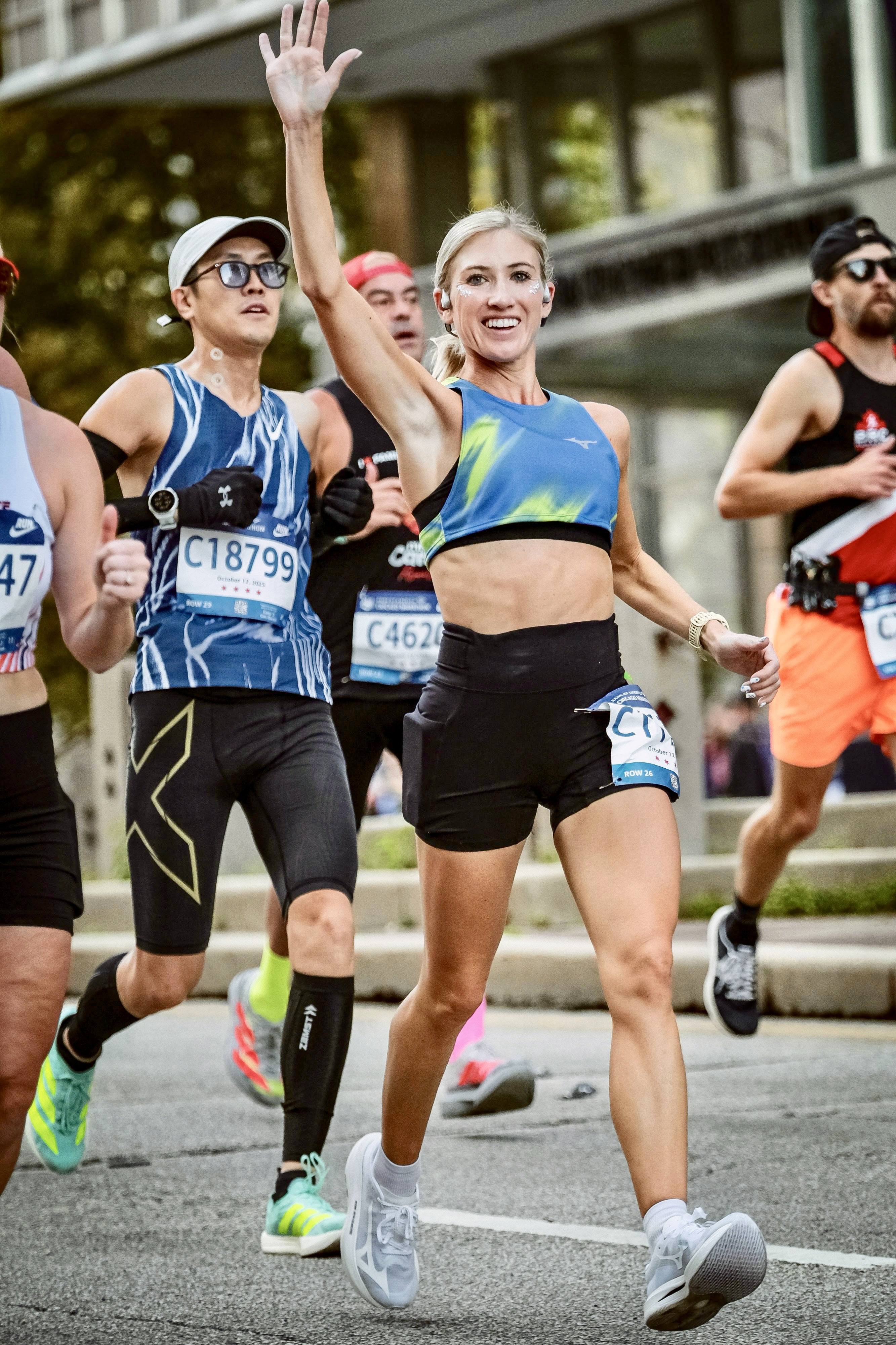
Let’s start from the beginning. After being diagnosed out of the blue with Multiple Sclerosis (MS) in 2022, my life was flipped upside down. As a healthy 29-year-old woman who runs marathons and takes care of her body, I was devastated. I had to figure out how to live my life through this new lens of an incurable disease that causes my body to attack itself, and as a result, damage my central nervous system.
After living with Multiple Sclerosis behind closed doors for two and a half years, I finally came forward, sharing the struggles I had been facing in February 2025. The running community met me with so much support, admiration, and empathy. This kindness changed my life, and having a platform, I knew from then on out I wanted to make a difference. I knew I wanted to take the hand I was dealt and create an impact.
That’s where my dream to break the Guinness World Record for the Fastest Female Marathon with MS was born.
As summer 2025 approached, I began laying the bricks. Coming off of running the Tokyo, Boston, and London Marathon, where I earned my sixth star medal for completing all of the Abbott World Marathon Majors, I knew I had momentum and fitness to work with.
I created “Project MS: Misconceptions Shattered”, which embodied my sentiment of wanting to prove that we are all capable of more than we realize, and can shatter misconceptions. Most notably, I wanted to prove to myself and others dealing with Multiple Sclerosis, chronic illnesses, and invisible diseases, that your diagnosis does not have to define you. My goal was to spread awareness, make noise in the space because these issues are not discussed enough, and to raise funds for the National Multiple Sclerosis Society to help find a cure for MS.
The previous record for the Fastest Female Marathon with Multiple Sclerosis was set at 3:53:02, and my objective was to, in turn, shatter it. Since I had beaten that mark previously, but not officially on the stage of breaking a Guinness World Record, I set a personal goal to finish in under 3:15:00, which would be over a five-minute personal best for me.
With a clear target in mind, I had four months over the summer and early fall to train, with my sights set on breaking 3:15:00. Foundationally, I incorporated easy runs, speed work, tempo runs, and long runs as part of a structured marathon training plan.
My training started off so well. I was feeling strong as I worked on building my endurance with long, easy runs and incorporating one designated speed session a week.
About halfway through my training block, I realized writing my own plan for such a big goal was becoming challenging because of how personally invested I was in breaking the record. I decided to hire a running coach, Jeff Cunningham, to handle the planning so I could focus on the workouts and build the confidence I needed to set a five-minute PR.
As a result, this became one of the most disciplined and intentional training blocks I’ve ever completed. I introduced more variety into my workouts and experimented with strategies I’d never used before, like shortening recovery between speed repeats while slightly easing the pace so my body could adapt to performing with less rest. My weekly mileage, which typically sits between 35 to 40 miles, gradually climbed closer to 50 miles at peak training. Every adjustment had one goal in mind: giving myself the best possible shot at securing the world record while still protecting my health.
However, MS comes with many challenges, and those were omnipresent throughout my training. I had to navigate unexpected fatigue, constant numbness in my feet and hands, brain fog, headaches, bowel issues, and everything in between. MS is unpredictable, so balancing it with consistency of training has been a delicate act. It’s also a snowflake disease, so no two cases are the same, meaning that everyone experiences different levels and severity of symptoms. Adapting and pivoting to protect my health while training was essential.
However, I never let myself feel guilty about switching a day of training around or needing to give my body something different than what was on the schedule. Most people might think this makes them vulnerable, but I built strength from the adaptations and a true second-nature ability to listen to my body. It also taught me how to really grind during training when times were tough, which paid dividends on race day.
One of the biggest keys to my training cycle, through it all, was using a variety of running shoes, no matter what workouts or obstacles I encountered. I found myself typically reaching for my Mizuno Wave Rebellion Pro 2 for my speed workouts, my Wave Rider 29 and Wave Sky 9 for easy runs, and my Neo Vista 2 and Zen for long runs, especially if there were pickups during them. I enjoyed having a stack full of training shoes I could count on, and these were a few that were staples in my rotation.
After three months of fully committed training, everything shifted five weeks out from race day. I got very sick, but not in the typical MS flare sense. However, because I live with MS, I am immunocompromised, which means when I get sick, I tend to get hit harder and stay sick longer than most people.
My MS treatment works by targeting specific immune cells. Those immune cells can no longer properly distinguish between healthy tissue and foreign threats, and in MS, they mistakenly attack the myelin sheath, causing neurological damage. The tradeoff of this treatment is a suppressed immune system, which makes even a common illness linger and escalate.
That is exactly what happened.
I repeated my mantra:
“I am a fighter.” I fight with everything I do. With MS, with my health, and with the adversity in my life. I’m doing this for everyone else to prove that our diagnoses do not define us.”
With just over a mile to go, I doubled down. I picked up my Hyperwarp Pure shoes one by one, increasing my cadence. I gave everything I had left to that last mile.
My breathing was heavy. My heart rate was high. My mind was soaring.
As I turned the last bend and peered up the hill, I knew the finish line was waiting.
Matt filmed that entire stretch. You could visibly see my last kick. My arms were driving. I opened up my stride as much as possible. My smile grew wider as I passed runners in the final meters. It was the clearest sign that, despite everything, this race had come together exactly as it needed to.
“You’ve got this, Elizabeth! You can do this! Let’s go.”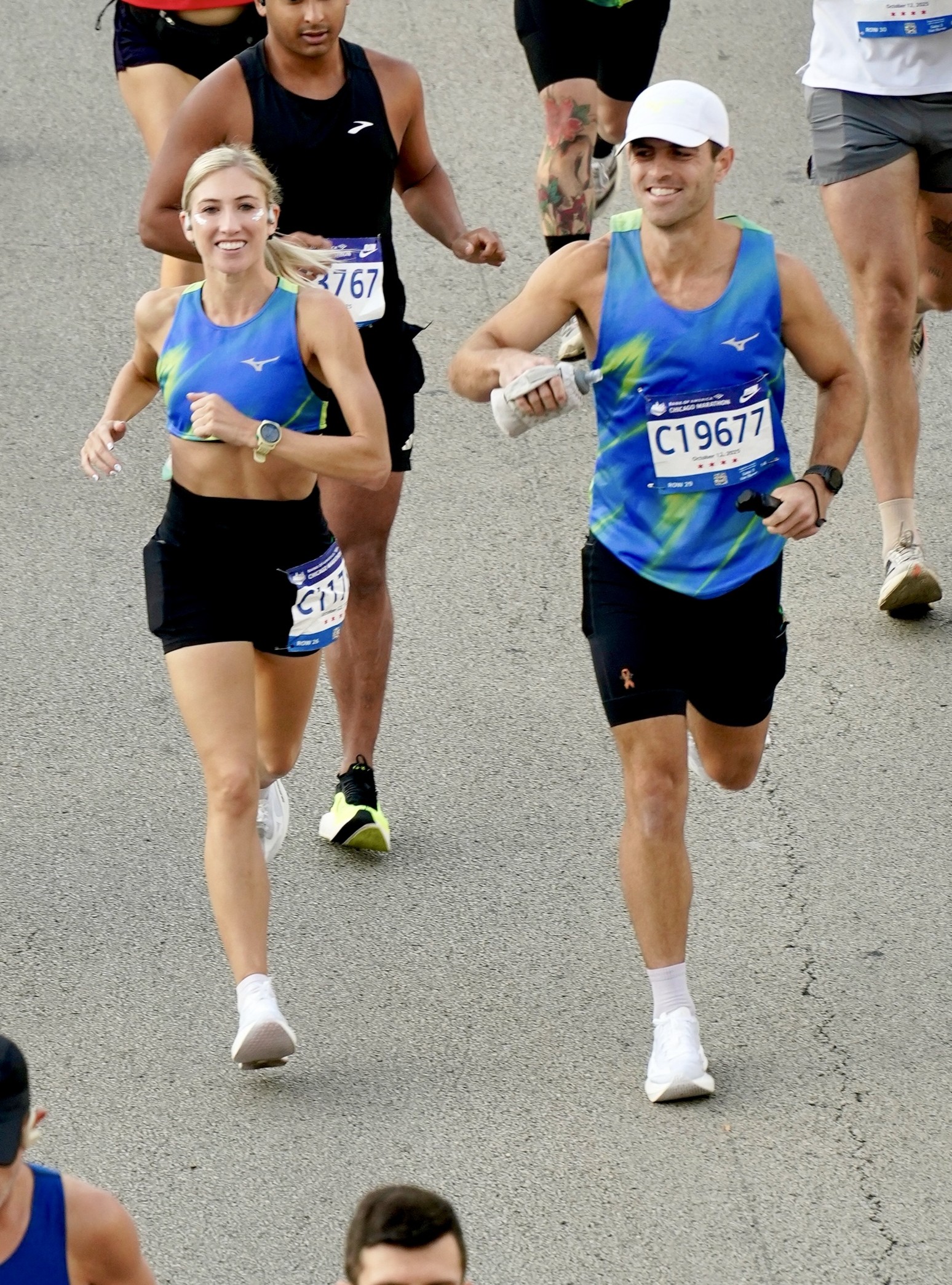
Hearing Matt cheer me on, someone who has seen me at my strongest and my most vulnerable with MS, made me so emotional. I knew I was about to accomplish something that once felt impossible when I was first diagnosed.
I crossed the finish line triumphantly. My arms were wide in a victory pose above my head, and a smile was plastered across my face, with a few tears in my eyes. It was the moment I had been dreaming about.
I made history finishing 3:12:13 as the Fastest Female Marathon with MS, shattering the previous by over 40 minutes. I could hardly believe it.
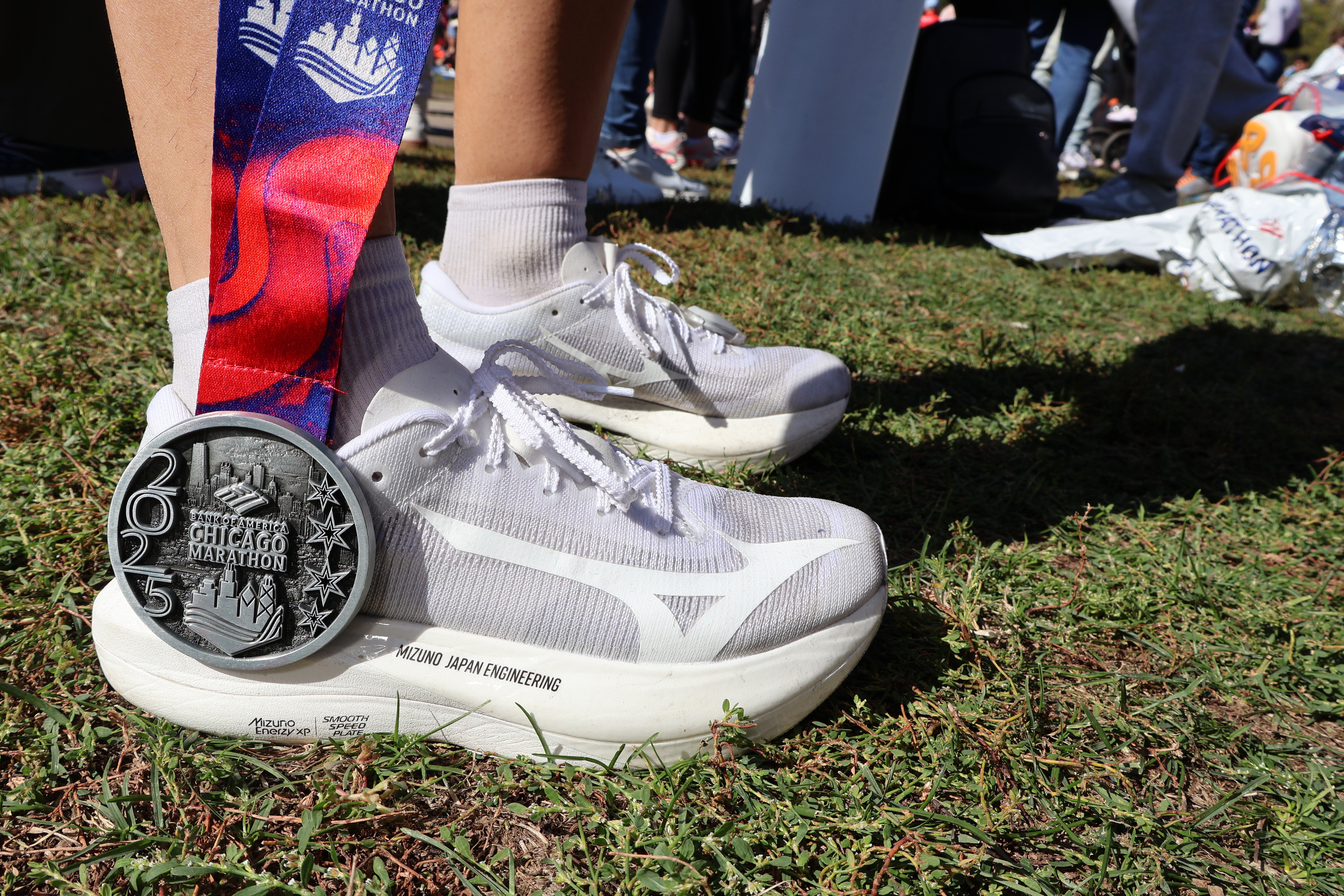
When a volunteer placed my medal upon my neck, it suddenly became real. This was a physical symbol of every sacrifice, every hard mile, every moment of doubt I pushed through. It stands as one of the greatest accomplishments of my life.
As I walked through the finish area, I met up with my coach, who greeted me with tremendous pride and enthusiasm, truly in awe of what I accomplished.
Soon after, runners began approaching me. One by one, they shared their connections to MS, chronic illness, and adversity. A woman told me her mother has MS. Another shared that she runs for her young son with a brain tumor. A man came up to me with tears in his eyes and thanked me for helping him navigate his own struggles.
This trend only continued as we made our way through the finishers’ area. There was a line of people waiting to talk. They wanted to know if I broke the record. They wanted to tell me how my story inspired them. In that moment, I knew I had succeeded not just in breaking a record but in spreading awareness for MS, invisible illnesses, and resilience.
That same curiosity followed me because of the Hyperwarp Pure. Runners stopped me left and right to ask about what was, at the time, an unreleased shoe, wanting to know what I thought and how it felt to race in them.
As I continue logging miles in the Hyperwarp Pure, I am excited to see how far they can take me, alongside Mizuno’s entire new speed silo. After fueling a seven-minute personal best and a Guinness World Record, I am confident they will become one of your favorite racing shoes too.